
Why Are Therapy Animals Beneficial in Dementia Care Communities?
Families searching for the right environment for a loved one living with Alzheimer’s or another dementia often focus on therapies that offer comfort, safety, and joy. Among the many approaches available in memory care, the use of therapy animals stands out for its ability to lift mood, spark connection, and ease distress in a gentle and natural way.
Research highlights that while the benefits are usually modest and strongest during active sessions, animal-assisted programs remain a meaningful addition to dementia care communities.
How Therapy Animals Support Emotional Well-being
One of the most consistent findings from clinical studies is the positive effect that therapy animals can have on mood. During structured sessions, many residents show brighter affect, increased social interaction, and reduced signs of sadness.
A Cochrane review concluded that animal-assisted therapy often leads to small but real improvements in depressive symptoms for those living with dementia. Noting this, families can reasonably expect their senior loved ones to experience emotional lifts during visits, though the impact typically fades if sessions stop.
The Mixed Evidence on Agitation
Agitation and restlessness are common symptoms in dementia, and families often wonder if therapy animals can help in this regard.
Some studies suggest a reduction in agitated behaviors after animal interactions, while others show no difference compared with usual care. Experts believe that the quality of program delivery, frequency of sessions, and alignment with resident preferences play critical roles.
In a well-run memory care home, therapy animal visits can complement other strategies to create calmer, more comfortable days.
Encouraging Social Connection and Conversation
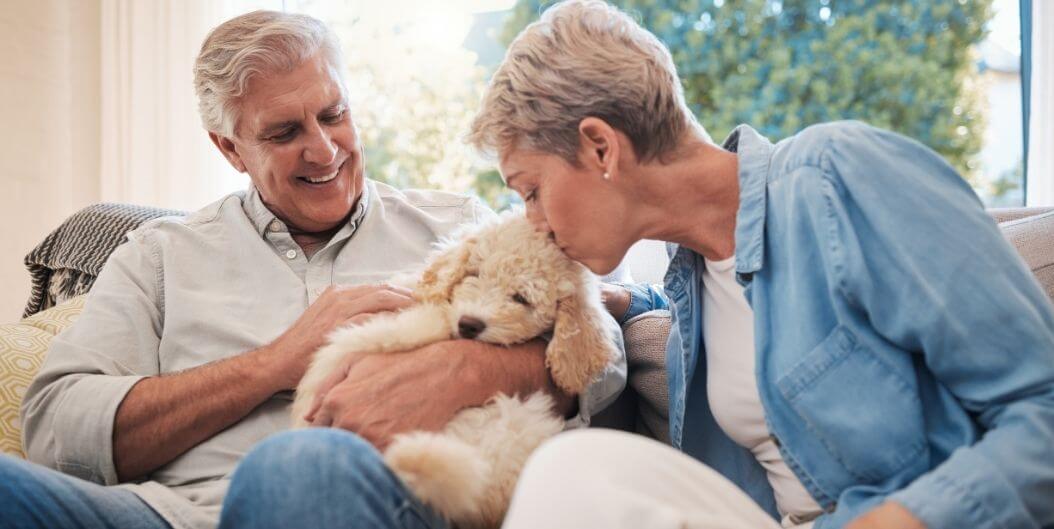
Therapy animals also provide a powerful bridge to social engagement. Residents in dementia care homes often exhibit increased eye contact, conversation, and smiles during visits with animals. Petting a dog’s fur or remembering a childhood pet can draw even the most reclusive individuals.
Large studies demonstrate increased participation and pleasure during animal therapy sessions. For families, seeing their loved ones connect in this way can be deeply reassuring.
Physical Benefits And Stress Reduction
Beyond emotional gains, animal interactions can have subtle effects on your senior loved one’s physical health. Research suggests that older adults who spend time with animals experience lowered blood pressure, steadier heart rates, and reduced stress hormones.
While evidence specific to Alzheimer’s & dementia care is still developing, many caregivers observe calmer breathing and relaxed posture when residents interact with a therapy dog or cat. These small physical changes contribute to an overall sense of well-being.
What Quality Animal-Assisted Programs Look Like
Not all therapy animal programs are created equal. Families touring a memory care community should ask how the program is structured.
Qualified handlers, adherence to international animal-assisted therapy standards, and proper documentation of goals and outcomes all signal high quality. Safety protocols, including hygiene and vaccination requirements, are essential. Good programs also consider animal welfare, limiting session length, and providing rest for the animals themselves.
Practical Tips Families Can Use
Families can extend the benefits of therapy animal programs by sharing their loved one’s history with pets, favorite breeds, or any fears with community staff. Short, predictable sessions of 15 to 30 minutes often work best, especially when paired with meaningful tasks like brushing a dog or offering treats.
Memory care staff are always vigilant, watching carefully for cues such as smiles, eye contact, or relaxed posture to make sure that the interaction remains enjoyable and safe.
Why Residents With Dementia Respond To Animals
Many people with Alzheimer’s respond positively to gentle sensory input and predictable companionship, which therapy animals provide in abundance. For those who loved pets earlier in life, the sense of familiarity can be particularly strong.
Even when memory fades, the comfort of touch and the nonjudgmental presence of an animal can trigger feelings of trust and connection in an Alzheimer’s & dementia care home.
Worried About Your Senior Loved One’s Mental and Emotional Well-being? Move Them to Bristol Park Memory Care in Conroe Today
Therapy animals remind us that care is about more than safety and routine; it’s about nurturing the human spirit. At Bristol Park Memory Care in Conroe, Texas, we see firsthand how animal-assisted programs bring comfort, laughter, and connection to residents. Families visiting our dementia care community often witness their loved ones smile, reminisce about the old times, and engage in new ways during these sessions.
When the time comes to choose an Alzheimer’s & dementia care community, it helps to know that options like Bristol Park at Conroe go beyond basic support by weaving in programs that nurture emotional health as well as physical safety. We welcome you to schedule a tour and stroll along Main Street, meet our compassionate team, and discover how our dementia care home creates meaningful experiences for your senior loved one.