The Scientific Benefits of Music Therapy in Memory Care Communities
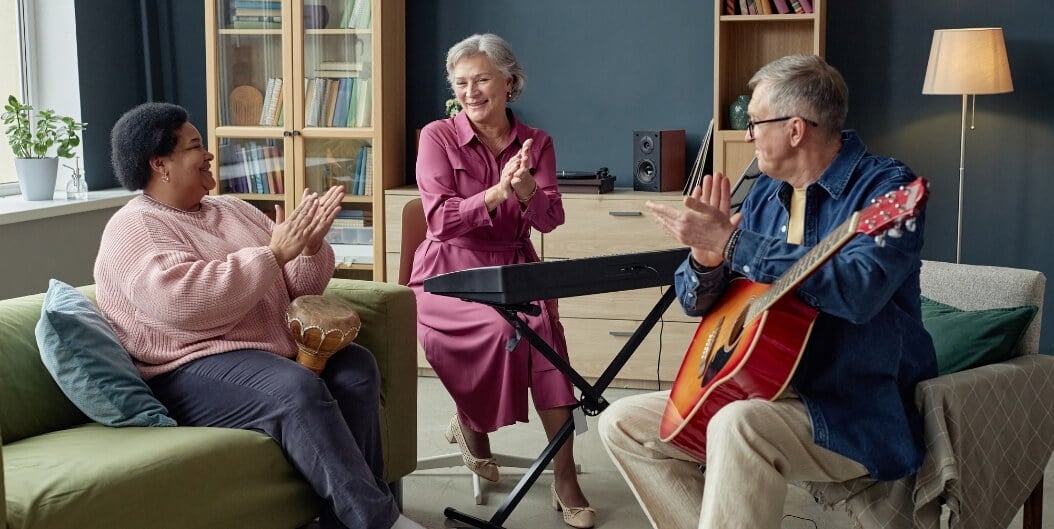
Families searching for the best memory care community often want to know which therapies truly make a difference for their loved ones living with Alzheimer’s or dementia. Among the most studied non-drug approaches is music therapy, a structured and professional use of music to enhance emotional well-being and engagement.
Unlike simply playing background music or creating a playlist, music therapy in memory care communities involves individualized sessions led by trained therapists who tailor music to each person’s personal history and measure outcomes such as mood and participation.
How Music Supports Emotional Wellbeing
Studies consistently show that music therapy offers meaningful short-term benefits for people living with dementia.
A Cochrane review pooling randomized trials found that after several structured sessions, participants often experienced reduced depressive symptoms compared to usual care. Families also report brighter affect and more eye contact during and just after music sessions.
What Research Reveals About Agitation and Medications
Agitation can be one of the most challenging aspects of dementia care. Researchers tested personalized music programs in a large pragmatic trial across dozens of dementia care communities.
The study found that agitation scores and use of psychotropic medications did not decrease significantly, though implementation challenges such as identifying true music preferences and maintaining staff engagement were noted.
While music can soothe in the moment, lasting reductions in agitation may require careful, consistent delivery and integration with other strategies in dementia care homes.
The Cognitive and Social Side Of Music
You may wonder if music therapy can improve memory or slow down the progression of cognitive decline. The most reliable evidence suggests that music affects mood and engagement rather than cognition.
While test scores on memory tasks may not change, familiar songs often spark autobiographical recall and encourage participation in social activities.
These moments of recognition and connection can be profoundly meaningful, helping your senior loved one feel seen and valued in ways that transcend test results. It’s one of the many reasons why Alzheimer’s & dementia care programs continue to integrate music into daily routines.
Why Music Still Reaches The Brain
One of the reasons music therapy is so effective lies in the way the brain processes music. Neuroimaging studies reveal that even as Alzheimer’s progresses, regions responsible for musical memory and reward remain relatively preserved.
That explains why a favorite hymn, wedding song, or melody from young adulthood can awaken memories and emotions when other communication pathways feel closed. In an Alzheimer’s & dementia care community, these responses are incredibly touching and also help staff and families strengthen bonds with residents.
What To Look For in a Memory Care Program
When visiting a memory care community, you can ask a few practical questions to distinguish thoughtful programs from casual entertainment.
Who delivers the sessions? Board-certified music therapists provide clinical expertise and structure, while informal sing-alongs, though enjoyable, do not provide the same benefits.
How personalized is the music? The best programs develop a sort of musical life history for each resident, capturing genres, artists, and meaningful songs from their cultural and personal background.
Effective programs also align music with daily routines: energizing tracks in the morning, soothing ones at night, and tailored playlists for mealtime or personal care tasks. Families may also want to ask how outcomes are measured.
Good documentation helps make sure that therapy is enjoyable and incredibly effective. These steps distinguish a well-structured memory care program where music is truly enjoyed instead of just being a background noise.
Building Playlists Families Can Use at Home
Music can also be meaningful outside of formal therapy. Families can create their own supportive playlists by focusing on songs from ages 10 to 30, a period known as the “reminiscence bump” when many lasting memories are formed. Including tracks tied to milestones like weddings, graduations, or faith traditions increases the chance of sparking recognition.
Memory care communities keep sessions brief, maintain a comfortable volume, and constantly monitor reactions. While smiles, steady breathing, or relaxed body language often signal success, signs of tension may indicate the need for a change.
Setting Realistic Expectations
Families should know what music therapy can and cannot do. Evidence supports short-term improvements in mood, reduced depression, and increased social connection during and just after sessions. However, the research does not show consistent long-term reductions in agitation or medication use, and it does not suggest music therapy slows disease progression.
Even so, music therapy remains highly recommended by leading organizations because of its low risk, meaningful impact, and ability to enrich everyday life.
Give Your Loved One With Dementia a Place to Thrive at Bristol Park at Conroe Memory Care
Music therapy infuses memory care with warmth and connection, turning ordinary moments into meaningful opportunities for joy.
The welcoming community at Bristol Park at Conroe Memory Care, values activities like music therapy as essential to enhancing each resident’s quality of life. Evidence-based practices work hand in hand with compassionate care, creating an environment where residents feel safe, supported, and genuinely celebrated.
Families looking into memory care communities in the Texas area can trust Bristol Park at Conroe Memory Care to provide both professional care and meaningful enrichment. Our approach recognizes that dignity and joy are as essential as safety and health.
Contact us to book a tour and see how our music, compassion, and community come together to create a truly supportive environment for your senior loved one.